Personality tests have become an essential component of the hiring process. Companies use these tests as pre-employment assessments to gain insight into a candidate’s behavior, motivations, and fit within the company culture. These evaluations, also known as personality assessment tests for employment, are designed to predict job performance, teamwork compatibility, and long-term potential. Knowing how to approach a job application personality test strategically can make a significant difference in your success.
This guide will provide detailed strategies on how to pass a personality test, including preparation tips, examples of popular personality tests, practice strategies, and understanding behavioral assessments.
Key Takeaways - How Do You Pass a Personality Test for a Job?
- Understand the Purpose: Personality tests are used to predict job performance, cultural fit, and workplace behavior, not just skills.
- Know the Popular Tests: Familiarize yourself with DISC assessments, OCEAN personality test, MBTI, Caliper Profile, and Hogan Personality Inventory.
- Practice Makes Perfect: Take multiple practice personality assessment tests to become comfortable with question formats and timing.
- Align with Job Requirements: Review the role’s description and emphasize traits relevant to the position, such as agreeableness for teamwork or conscientiousness for technical roles.
- Prepare for Behavioral Questions: Reflect on past experiences and plan consistent, professional responses to behavioral test or situational questions.
- Use Personality Frameworks Strategically: Understand the OCEAN (Big Five) and DISC models to answer questions in ways that reflect both your personality and the role’s requirements.
- Be Honest and Authentic: Modern personality assessment tests for employment can detect inconsistent or “faked” responses, so answer truthfully.
- Optimize Test Environment: Take assessments in a quiet, comfortable space with minimal distractions and a stable internet connection for online tests.
- Understand Scoring: Tests compare your responses to ideal profiles for the role. Knowing how scoring works helps you respond thoughtfully.
- Continuous Improvement: Review results, practice more tests, and reflect on your traits to improve performance for future job application personality tests and pre-employment assessments.
- Reflect on Strengths and Weaknesses: Use insights from the test to identify areas for growth and professional development.
- Preparation Builds Confidence: Being familiar with the types of personality questions, test formats, and scoring methods reduces anxiety and improves performance.
How Do You Pass a Personality Test for a Job? – What You will learn?
- The Purpose of Personality Tests: Understand why employers use them and what traits they evaluate.
- Different Types of Personality Tests: Learn about DISC assessments, OCEAN personality test, MBTI, and other popular personality tests.
- The Role of Pre-Employment Assessments: Understand how employee personality tests and behavioral tests fit into the hiring process.
- Preparation Strategies: Discover how practice personality assessment tests can improve your performance and confidence.
- Aligning Traits with Job Requirements: Learn which personality traits are valued for specific roles and how to highlight them.
- Behavioral and Situational Question Tips: Understand how to answer personality questions and scenario-based questions effectively.
- Using Personality Frameworks: Gain insights into OCEAN and DISC assessments and how to approach them strategically.
- The Importance of Honesty: Learn why authentic responses are better than “faking” answers.
- Test Environment Tips: Discover how to optimize your setting for better focus and performance during pre-employment assessments.
- Scoring and Interpretation: Understand how results are analyzed and compared to ideal candidate profiles.
- Continuous Improvement: Learn how to reflect, practice, and improve for future job application personality tests.
- Practical Application: Gain actionable tips for how to pass a personality test and how to pass an assessment test for real-world job success.
1. Understanding the Purpose of Personality Tests
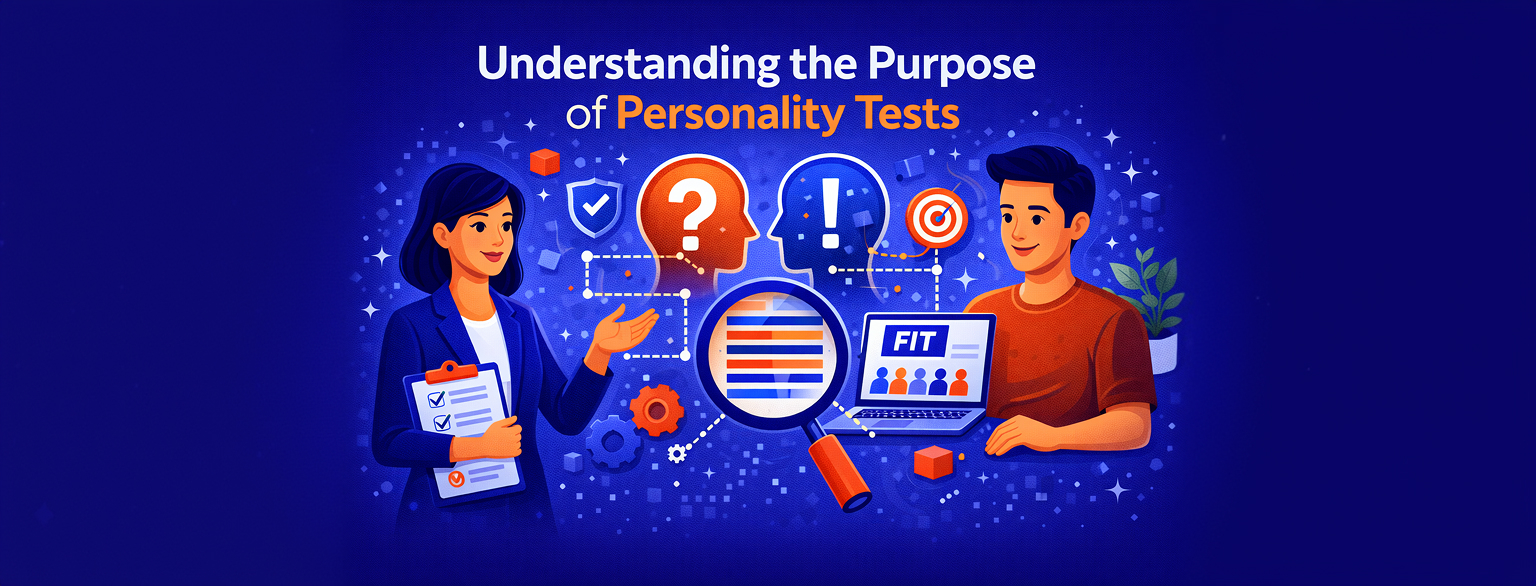
The first step in learning how to pass a personality test is understanding its purpose. Employers use personality assessments to measure behavioral tendencies rather than technical skills. Unlike an aptitude test for employment, which evaluates cognitive ability or technical knowledge, a personality assessment examines traits such as:
- Conscientiousness
- Emotional stability
- Leadership potential
- Sociability and teamwork
- Stress tolerance
The goal is to determine whether a candidate’s natural tendencies align with the company’s expectations and the demands of the role. For instance, an employee personality test may focus on problem-solving, adaptability, and interpersonal skills for positions that require collaboration. Recognizing this distinction allows you to prepare for the test effectively.
2. Familiarize Yourself with Popular Personality Tests
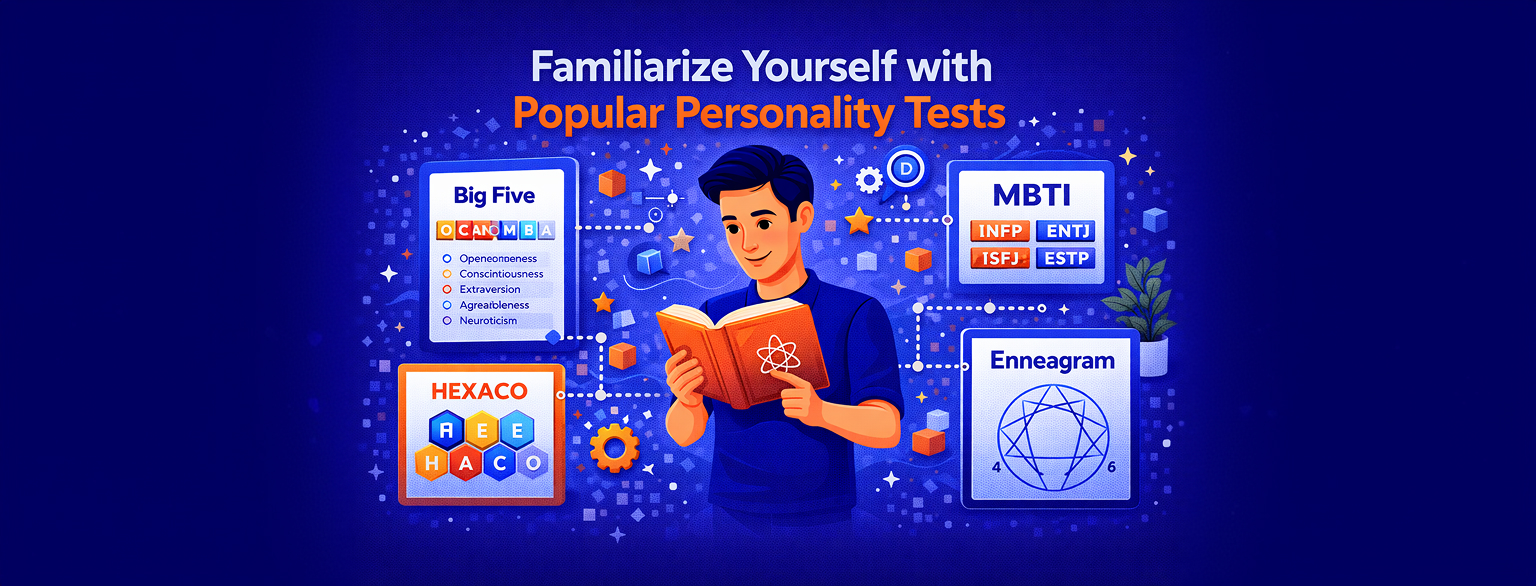
Several popular personality tests are used by employers worldwide. Understanding the structure and purpose of these assessments is crucial to success. Some of the most common include:
- DISC Assessments: Measures four dimensions of behavior: Dominance, Influence, Steadiness, and Compliance. Example: “How do you handle conflict in a team setting?”
- OCEAN Personality Test (Big Five): Evaluates Openness, Conscientiousness, Extraversion, Agreeableness, and Neuroticism. Example: “I enjoy learning new skills and taking on novel challenges.”
- MBTI (Myers-Briggs Type Indicator): Sorts candidates into 16 personality type test based on preferences in four dichotomies (E/I, S/N, T/F, J/P).
- Caliper Profile: Focuses on personality traits and potential workplace performance.
- Hogan Personality Inventory: Assesses potential career derailers and workplace behaviors.
Knowing which test you might encounter allows you to focus on preparation and practice specific types of personality questions.
3. Practice Personality Assessment Tests
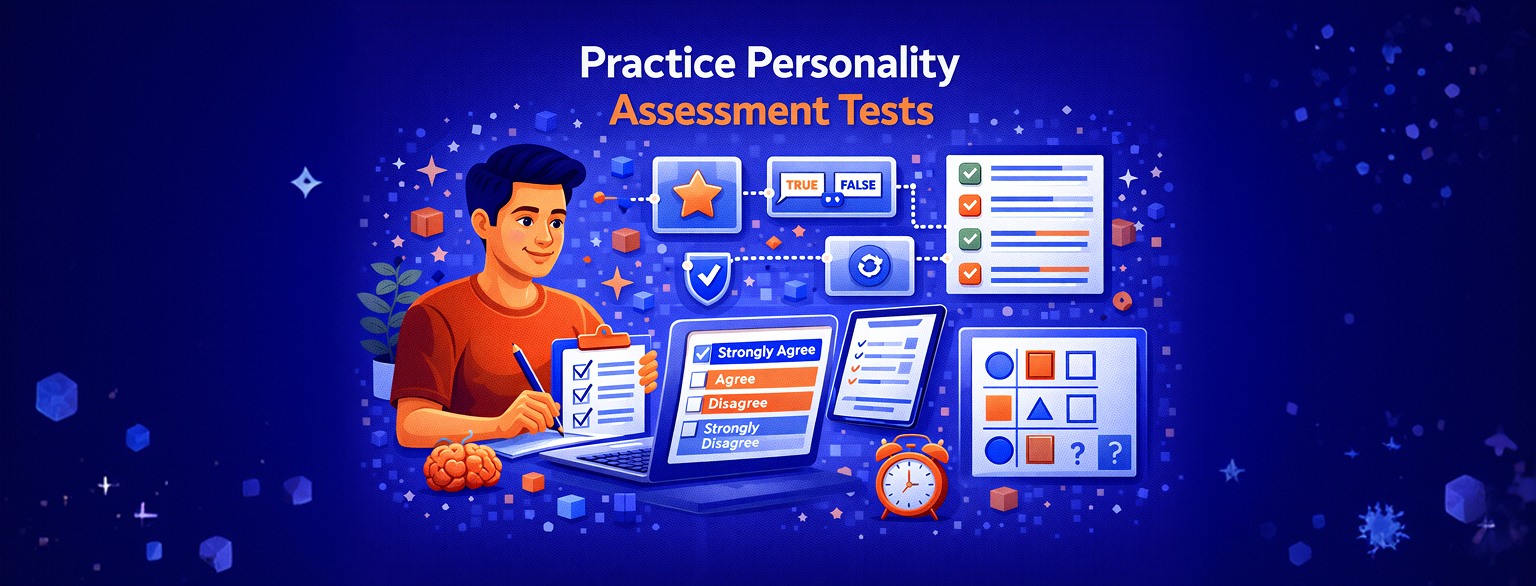
Practice is one of the most effective ways to learn how to pass a personality test. Taking practice personality assessment tests familiarizes you with the format, timing, and types of questions. Platforms like online career sites and assessment prep websites offer free and paid practice tests.
Benefits of practicing include:
- Identifying your natural tendencies and patterns.
- Learning to respond consistently to avoid contradictions.
- Reducing anxiety by understanding test structure.
Remember, personality assessment tests for employment often include consistency checks. Honest, self-aware answers are more effective than trying to “game” the test.
Example practice exercise for DISC assessment:
- Question: “You prefer to work: A) In a team, B) Independently”
- Tip: Answer in a way that reflects your natural preference for the role.
4. Align Your Personality with the Job Requirements
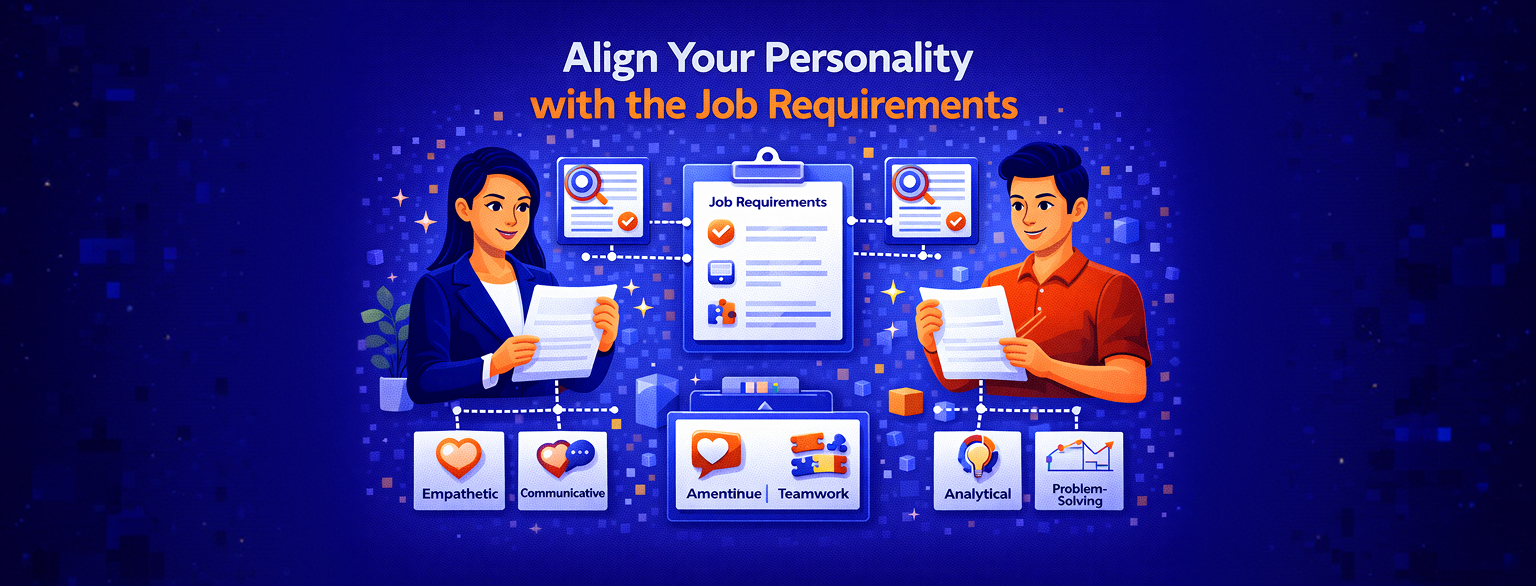
When preparing for a job application personality test, it’s essential to understand the traits valued for the specific role. Not all positions require the same qualities:
- Customer service roles: High agreeableness and extraversion.
- Leadership positions: High dominance, confidence, and problem-solving skills.
- Technical roles: High conscientiousness, attention to detail, and reliability.
Tailoring your responses to demonstrate alignment with these traits (without being dishonest) can improve your performance on the test.
5. Prepare for Behavioral and Situational Questions
Many personality assessment tests for employment include behavioral test questions. These questions assess how you would respond to workplace scenarios. Common examples include:
- “You are given a task with a tight deadline. How do you approach it?”
- “A coworker disagrees with your plan. How do you respond?”
Tips for answering behavioral questions effectively:
- Stay consistent with your natural tendencies.
- Demonstrate teamwork, problem-solving, and professionalism
- Avoid extreme. responses; moderate answers often reflect flexibility.
Situational judgment questions are common in pre-employment assessments, and practicing responses can significantly improve your confidence.
6. Use Tools Like OCEAN and DISC to Your Advantage
Understanding frameworks like the OCEAN personality test and DISC assessments can help you perform better:
- OCEAN (Big Five) evaluates:
- Openness: Creativity and willingness to try new things.
- Conscientiousness: Organization and reliability.
- Extraversion: Energy and sociability.
- Agreeableness: Cooperation and empathy.
- Neuroticism: Emotional stability.
- DISC Assessments categorize responses into:
- Dominance: Assertiveness and goal orientation.
- Influence: Persuasiveness and communication.
- Steadiness: Patience and consistency.
- Compliance: Attention to rules and quality.
Knowing these frameworks helps you answer questions in a way that reflects both your personality and the traits desired for the role.
7. Be Honest and Authentic
A key rule for how to pass a personality test is honesty. Modern personality assessment tests for employment are designed to detect inconsistencies or overly “idealized” answers. Pretending to be someone else can backfire.
Tips for authenticity:
- Answer questions according to your true behavior.
- Highlight professional strengths without exaggeration.
- Avoid “faking” responses to match perceived ideal traits.
Being honest ensures that your personality is a good fit for both the role and the company culture.
8. Pay Attention to Test Environment
Your environment can influence your performance on a personality assessment. Follow these tips:
- Choose a quiet, distraction-free area.
- Ensure a stable internet connection for online pre-employment assessments.
- Read each personality question carefully.
- Take breaks if allowed, especially for long assessments.
Small adjustments can improve focus, consistency, and accuracy in employee personality tests.
9. Understand Scoring and Interpretation
Most personality assessment tests for employment do not have right or wrong answers. Instead, your results are compared to a profile that represents the ideal traits for the position.
- DISC scoring reflects tendencies in dominance, influence, steadiness, and compliance.
- OCEAN scoring shows where you fall on the Big Five traits.It is often called as a big five personality test.
- Behavioral assessments evaluate responses for consistency, professionalism, and alignment with role requirements.
Understanding scoring helps you approach the test strategically without sacrificing authenticity.
10. Continuous Improvement and Resources
Continuous learning improves your chances of success in pre-employment assessments:
- Take multiple practice personality assessment tests.
- Review popular personality tests like DISC, MBTI, and OCEAN.
- Study typical personality questions for your industry.
- Learn techniques for how to pass an assessment test.
Reflection and preparation also help in interviews where employers discuss your personality assessment inventory results. Demonstrating self-awareness reinforces your fit for the role.
Conclusion:
Passing a personality test for a job involves preparation, practice, and self-awareness. By familiarizing yourself with popular personality tests, practicing employee personality tests, and understanding behavioral assessments, you can improve your performance. Frameworks like DISC assessments and the OCEAN personality test provide insights that help you align your natural traits with the job.
Always remain honest and authentic. Employers use personality assessment tests for employment not only to select the right candidate but to ensure long-term success in the role. By following this guide and practicing consistently, you can approach job application personality tests with confidence and increase your chances of securing the position.
Frequently Asked Questions
A personality test is a type of pre-employment assessment designed to evaluate traits like behavior, emotional stability, teamwork, and problem-solving skills to determine a candidate’s fit for a role.
Employers use them to predict job performance, team compatibility, and cultural fit, as well as to identify leadership potential and workplace behavior tendencies.
Some widely used tests include DISC assessments, OCEAN personality test (Big Five), MBTI, Caliper Profile, and Hogan Personality Inventory.
- Take practice personality assessment tests.
- Review the job description to understand desired traits.
- Familiarize yourself with popular personality tests like DISC and OCEAN.
- Reflect on your past experiences for behavioral questions.
Personality tests don’t have “right” or “wrong” answers. They measure traits against an ideal candidate profile. Poor alignment with the role’s traits may reduce your chances, but honesty and consistency are more important than “gaming” the test.
- Personality tests measure traits, behavior, and interpersonal tendencies.
- Aptitude tests assess cognitive skills, problem-solving, or technical ability the test.
DISC assessments categorize behavior into Dominance, Influence, Steadiness, and Compliance. They evaluate how you approach tasks, interact with others, and respond to challenges in the workplace.
Also known as the Big Five, OCEAN measures five traits: Openness, Conscientiousness, Extraversion, Agreeableness, and Neuroticism, helping employers understand your natural tendencies and suitability for the role.
Be consistent, honest, and professional. Provide responses that demonstrate teamwork, problem-solving, adaptability, and reliability while reflecting your natural personality.