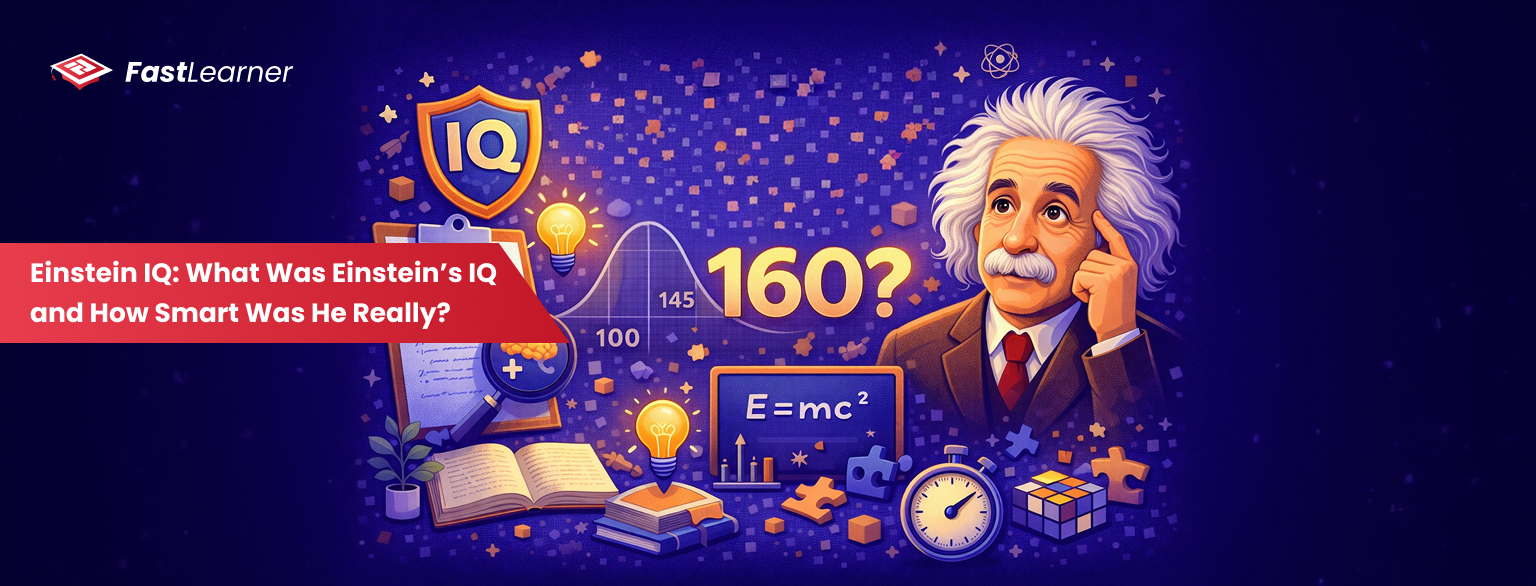
If you’ve ever wondered, “What was Einstein’s IQ?”, you’re not alone. The term Einstein IQ has become almost synonymous with extreme intelligence. People often use his name as a benchmark for genius—but surprisingly, the exact answer isn’t as straightforward as you might think.
In this article, we’ll explore the truth behind Einstein IQ level, separate myths from facts, and explain why his intelligence goes far beyond a simple number.
Key Takeaways - What Was Einstein’s IQ and How Smart Was He Really?
- Einstein never took an official IQ test, so his exact IQ is unknown.
- Experts estimate Einstein IQ to be between 160 and 190, placing him in the genius category.
- The term Einstein IQ level is based on assumptions from his achievements, not verified data.
- Einstein’s intelligence came from creativity, curiosity, and original thinking, not just logic or test scores.
- His groundbreaking work, like the Theory of Relativity and E = mc², proves his exceptional intellect.
- A high IQ alone does not define genius—innovation and imagination matter just as much.
- The myth that Einstein failed math is false; he was actually excellent in mathematics from a young age.
- IQ tests measure problem-solving and reasoning, but they do not fully capture creativity or deep thinking.
- Compared to modern figures, Einstein’s estimated IQ is similar to other geniuses, but his impact on science is unmatched.
- You don’t need an “Einstein IQ” to succeed—passion, persistence, and curiosity are equally important.
What Was Einstein’s IQ and How Smart Was He Really – What You will learn?
- Why Einstein never had an official IQ test and what that means.
- The estimated IQ range for Albert Einstein and how experts determine it.
- How Einstein’s genius extended beyond IQ, including creativity and problem-solving.
- Common myths about Einstein’s intelligence, like the idea he failed math.
- How his achievements in science, such as the Theory of Relativity and E = mc², reflect his intellect.
- The difference between IQ, emotional intelligence (EQ), and overall genius.
- How Einstein’s thinking compares to modern geniuses and high-IQ individuals.
- Why IQ alone doesn’t define success and what traits really matter.
- The importance of curiosity, creativity, and independent thinking in measuring true intelligence.
- How understanding Einstein’s IQ can inspire personal growth and learning strategies.
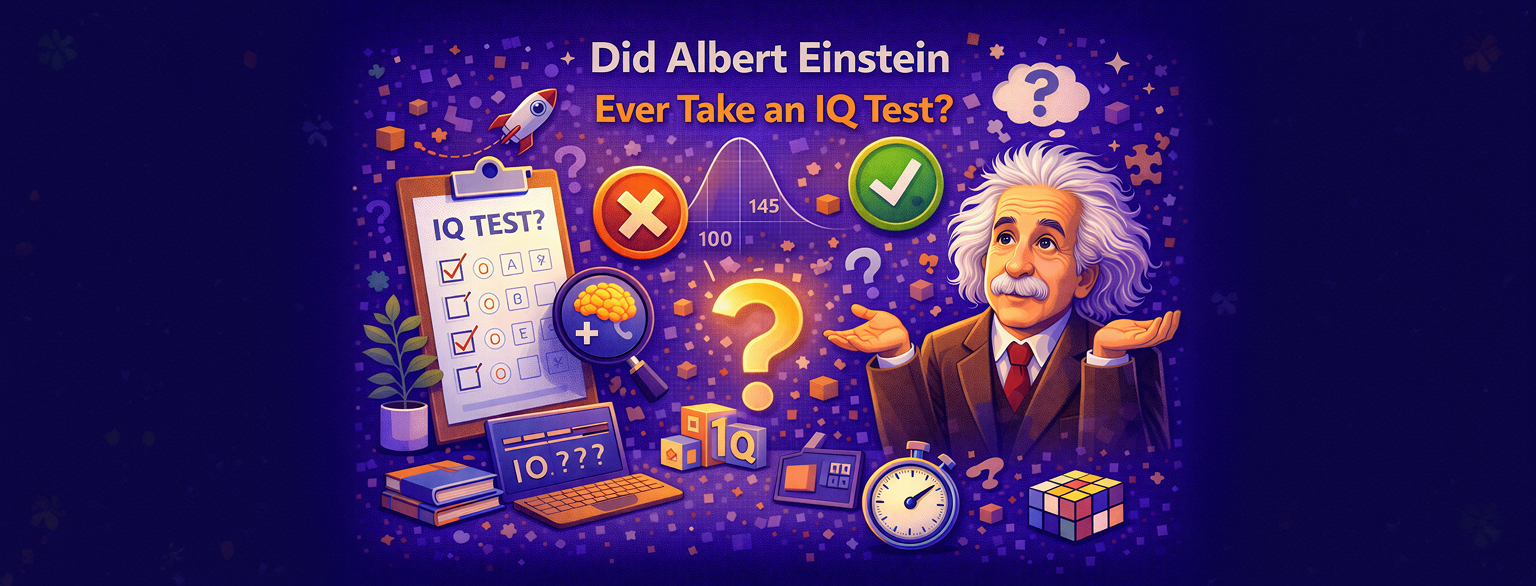
Did Albert Einstein Ever Take an IQ Test?
Here’s the most important fact:
👉 Albert Einstein never officially took an IQ test.
Modern IQ tests, as we know them today, became widely standardized after his early years. So, there is no documented IQ score for Einstein.
However, that hasn’t stopped experts and researchers from estimating his intelligence based on his achievements and abilities.
What Was Einstein’s IQ (Estimated)?
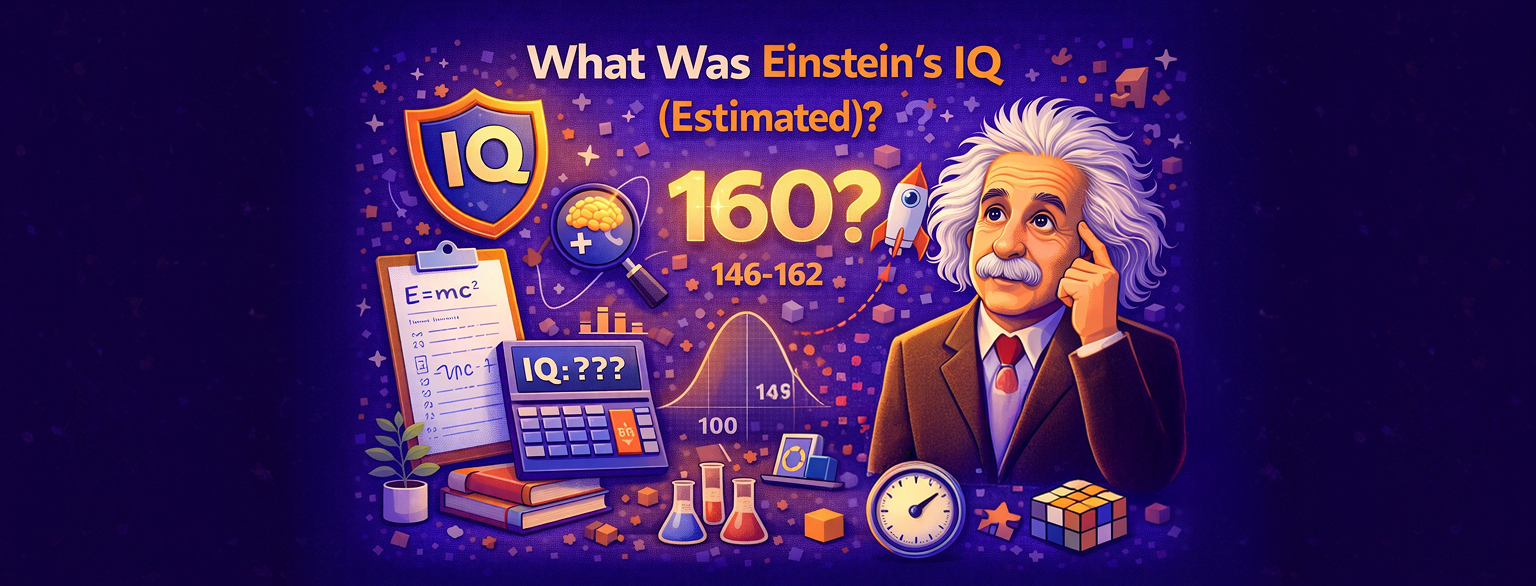
Most experts estimate that Einstein’s IQ was between 160 and 190.
• Average IQ: 100
• Gifted: 130+
• Genius level: 140+
So, based on these estimates, Einstein would fall into the extremely high genius category.
This estimated Einstein IQ level is often compared to other famous geniuses like:
• Isaac Newton
• Leonardo da Vinci
• Stephen Hawking
But it’s important to understand that these are educated guesses—not official scores.
Why Is Einstein Considered a Genius?
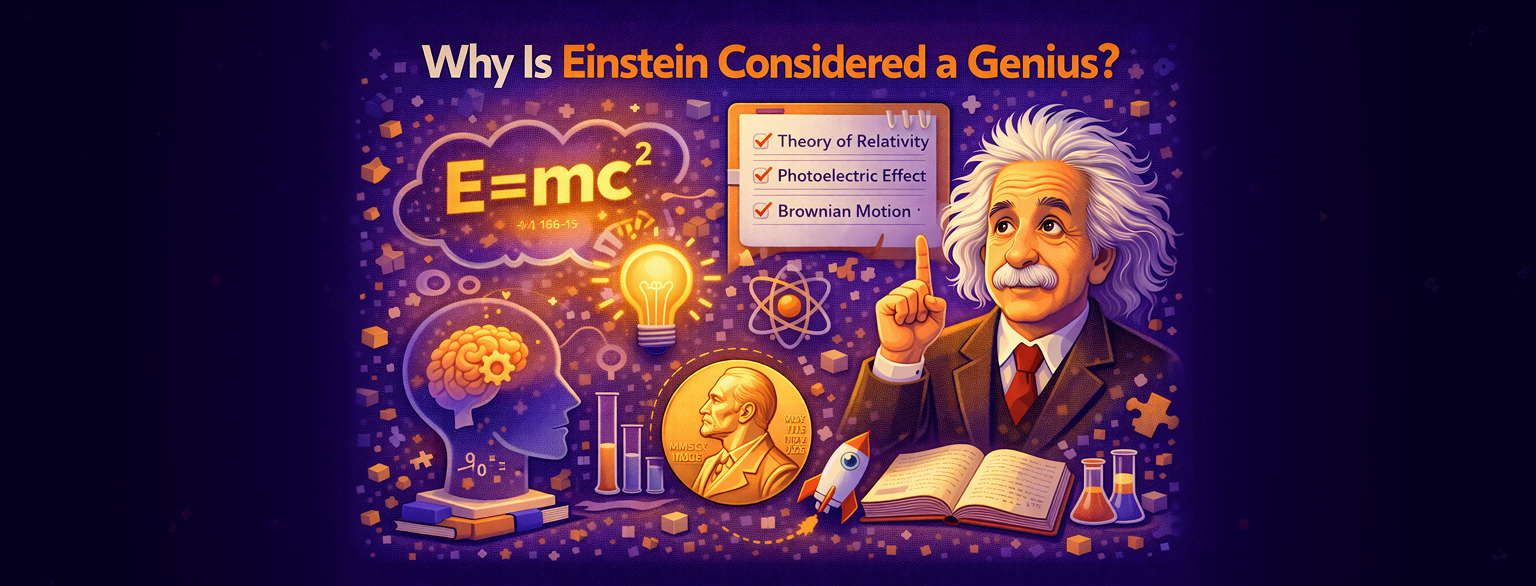
If Einstein never took an iq test, why is his name so strongly linked with intelligence?
The answer lies in his groundbreaking contributions to science.
1. Theory of Relativity
Einstein developed the Theory of Relativity, which completely changed how we understand space, time, and gravity.
2. E = mc²
This famous equation showed the relationship between energy and mass, revolutionizing physics and leading to advancements like nuclear energy.
3. Nobel Prize Achievement
He won the Nobel Prize in Physics for his work on the photoelectric effect—not relativity, which shows the depth of his contributions.
👉 These achievements demonstrate deep conceptual thinking, not just high test-taking ability.
Einstein IQ Level vs Modern Geniuses
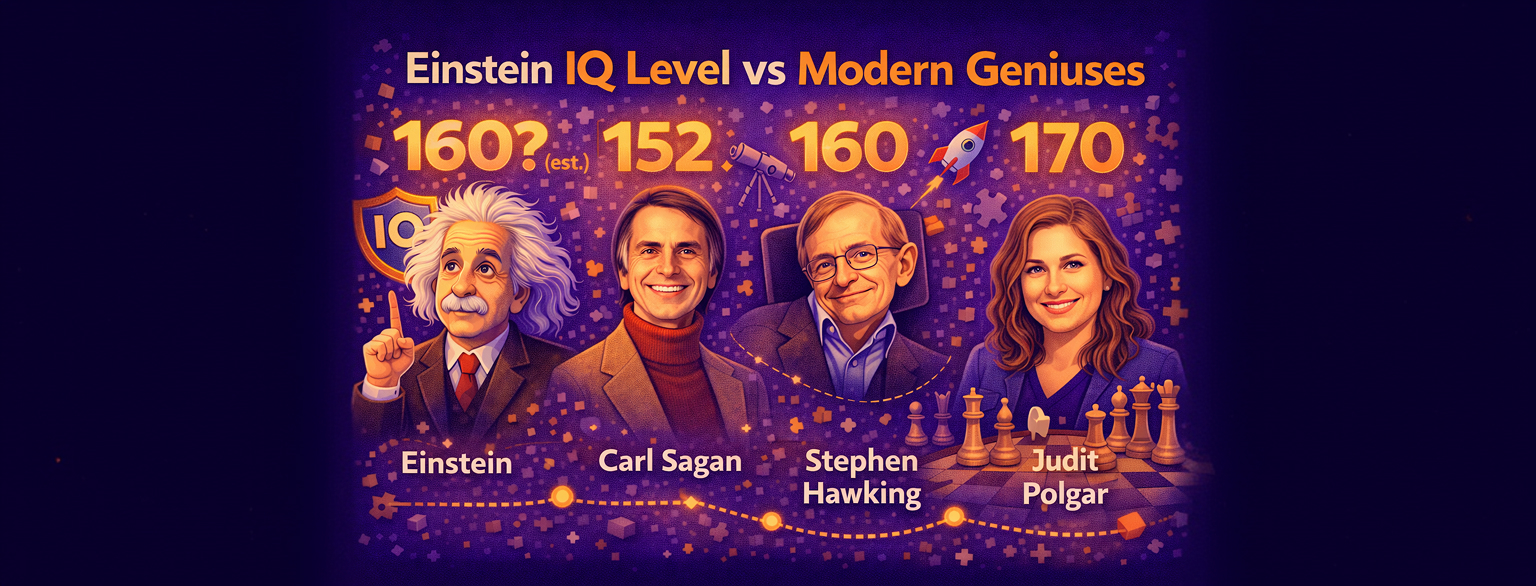
Let’s compare estimated IQ levels:
Person Estimated IQ
Einstein : 160–190
Stephen Hawking : ~160
Elon Musk (estimated) : ~155
Average person : 100
While Einstein’s IQ is impressive, it’s not necessarily the highest ever recorded. Some individuals today score similarly or even higher on IQ tests.
So why does Einstein still stand out?
 Because IQ alone doesn’t define genius.
The Myth of Einstein Failing School
One popular myth linked to Einstein IQ is that he was a poor student.
❌ Myth: Einstein failed math
✅ Fact: He excelled in math from a young age
In reality:
- He mastered calculus as a teenager.
- He struggled with rigid school systems—not intelligence.
This misconception persists because people often confuse non-conformity with lack of intelligence.
What IQ Tests Actually Measure
To understand Einstein IQ properly, you need to know what IQ tests measure:
- Logical reasoning.
- Pattern recognition.
- Memory.
- Problem-solving speed.
However, IQ tests do NOT measure:
- Creativity.
- Imagination.
- Curiosity.
- Original thinking.
👉 And these are exactly the traits that made Einstein extraordinary.
Why Einstein’s Intelligence Goes Beyond IQ
Einstein’s genius wasn’t just about solving problems, it was about asking new questions.
- Creative Thinking
He used thought experiments (like imagining riding a beam of light) to develop theories.
- Curiosity
Einstein famously said:
“I have no special talent. I am only passionately curious.”
- Independent Thinking
He challenged existing scientific beliefs instead of following them blindly.
These qualities are not captured in a typical personality test or IQ test, yet they define true innovation.
Einstein IQ vs Emotional Intelligence
Another important factor often ignored is emotional intelligence (EQ).
While we focus on Einstein IQ, success in life also depends on:
- Communication skills.
- Adaptability.
- Emotional awareness.
Einstein himself had a complex personality, showing that intelligence is multi-dimensional, not just a number.
Is a High IQ Necessary for Success?
Many people search for “Einstein IQ level” hoping to measure their own potential.
But here’s the truth:
👉 You don’t need an Einstein-level IQ to succeed.
Success depends on:
- Consistency
- Creativity
- Problem-solving
- Passion
There are countless successful individuals with average IQs who achieved greatness through persistence and innovation.
Why the Fascination with Einstein IQ?
The keyword “einstein iq” trends so often because:
- People want a benchmark for genius.
- His name represents ultimate intelligence.
- There’s mystery around his actual score.
But the fascination also reveals something deeper:
👉 We want intelligence to be simple and measurable, even though it’s not.
Einstein IQ and Modern Personality Understanding
Today, tools like:
- Personality tests
- Character quizzes
- Cognitive assessments help people understand themselves better.
But just like IQ tests, these tools only show part of the picture.
Einstein reminds us that:
👉 True intelligence is a mix of logic, creativity, curiosity, and perspective.
Final Thoughts: The Truth About Einstein IQ
So, what was Einstein’s IQ?
👉 The honest answer: We don’t know for sure.
But what we do know is far more important:
- His thinking changed the world.
- His curiosity drove discovery.
- His creativity redefined science.
The idea of Einstein IQ is powerful—but it’s also misleading if taken too literally.
Because true genius isn’t just about a number.
👉 It’s about how you think, question, and imagine the world.
Frequently Asked Questions
Einstein never took an official IQ test, but experts estimate his IQ to be between 160 and 190.
Not necessarily by IQ standards, but his impact on science makes him one of the greatest minds in history.
No, this is a myth. Einstein was highly skilled in mathematics from a young age.
His estimated IQ is similar to modern geniuses like Stephen Hawking, but intelligence today is measured in more diverse ways.
Not fully. IQ tests measure logic and reasoning but miss creativity, curiosity, and innovation.