Understanding your intelligence has never been easier thanks to the widespread availability of IQ tests and free IQ tests online. But what exactly does IQ stand for, and how do these tests measure your cognitive abilities? Whether you’re a student, beginner, or simply curious, this guide will break down the meaning of IQ, explain how IQ tests work, and reveal 10 fascinating facts that everyone should know. By the end, you’ll also learn how to take a reliable free IQ test and understand what your results really mean.
Key Takeaways -What Does IQ Stand For?
- IQ stands for Intelligence Quotient, a score used to measure human intelligence and cognitive ability.
- An IQ test evaluates skills like logical reasoning, memory, problem-solving, and verbal understanding.
- The average IQ score is 100, with most people scoring between 90 and 110.
- There are different types of tests, including standardized IQ tests, online IQ tests, and free IQ tests.
- A free IQ test can give a quick estimate of your intelligence but may not be fully accurate.
- Online IQ tests are लोकप्रिय (popular) because they are easy to access and take only a few minutes.
- Your IQ score can change over time with learning, practice, and mental training.
- IQ tests do not measure creativity or emotional intelligence, which are also important for success.
- Taking a free IQ test online is a simple way to explore your cognitive strengths and weaknesses.
- While useful, an IQ test should not define your potential, as intelligence is multi-dimensional.
What Does IQ Stand For? – What You will learn?
- What IQ stands for (Intelligence Quotient) and why it is used to measure intelligence.
- A clear, beginner-friendly explanation of how an IQ test works.
The key skills measured in IQ tests, including logic, memory, and problem-solving. - The meaning of IQ scores and what is considered average, high, or low.
- The different types of tests, including online IQ tests and free IQ tests.
- Whether a free IQ test is accurate and how reliable online results really are.
- 10 important facts about IQ tests that most people don’t know.
- A step-by-step guide on how to take a free IQ test online.
- The benefits of taking an IQ test for students and beginners.
- The limitations of IQ tests and why IQ doesn’t define your full potential.
1. What Does IQ Stand For?
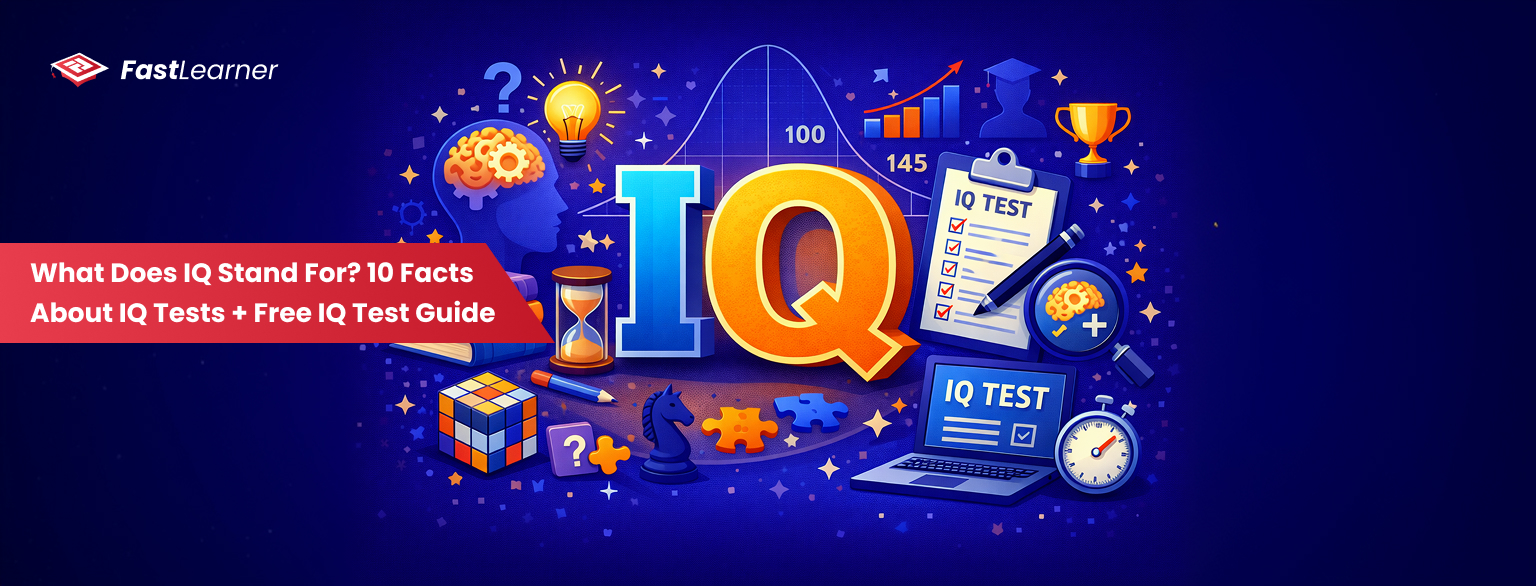
IQ stands for Intelligence Quotient. It is a score used to measure a person’s cognitive abilities compared to the general population. In simple terms, an IQ score helps estimate how well someone can think, reason, solve problems, and understand complex ideas.
The concept of IQ was developed to evaluate intellectual potential in a standardized way. Today, it is widely used in education, psychology, and even job assessments.
Many people first encounter the term when searching for an IQ test or trying a free IQ test online. But understanding what IQ really means goes beyond just a number, it reflects patterns of thinking and problem-solving ability.
2. What Is an IQ Test? (Beginner-Friendly Explanation)
An IQ test is a structured assessment designed to measure human intelligence. These tests evaluate different mental abilities, including:
- Logical reasoning
- Mathematical skills
- Pattern recognition
- Memory
- Verbal comprehension
Most IQ tests are standardized, meaning they are given and scored in a consistent way. This ensures that results are comparable across different individuals.
For beginners and students, IQ tests are often seen as a fun and insightful way to understand their strengths. Many platforms now offer a free IQ test, making it easier than ever to get started.
3. How Do IQ Tests Work?
IQ tests work by comparing your performance to others in your age group. The scoring system is based on a scale where:
- 100 is the average IQ.
- Scores above 100 indicate above-average intelligence.
- Scores below 100 indicate below-average performance.
Here’s a simple breakdown:
- 90–109 → Average.
- 110–119 → High average.
- 120–129 → Superior
- 130+ → Very high.
Modern IQ tests use statistical methods to ensure fairness and accuracy. Your score is not just about correct answers—it also considers difficulty levels and response patterns.
4. Types of IQ Tests You Should Know
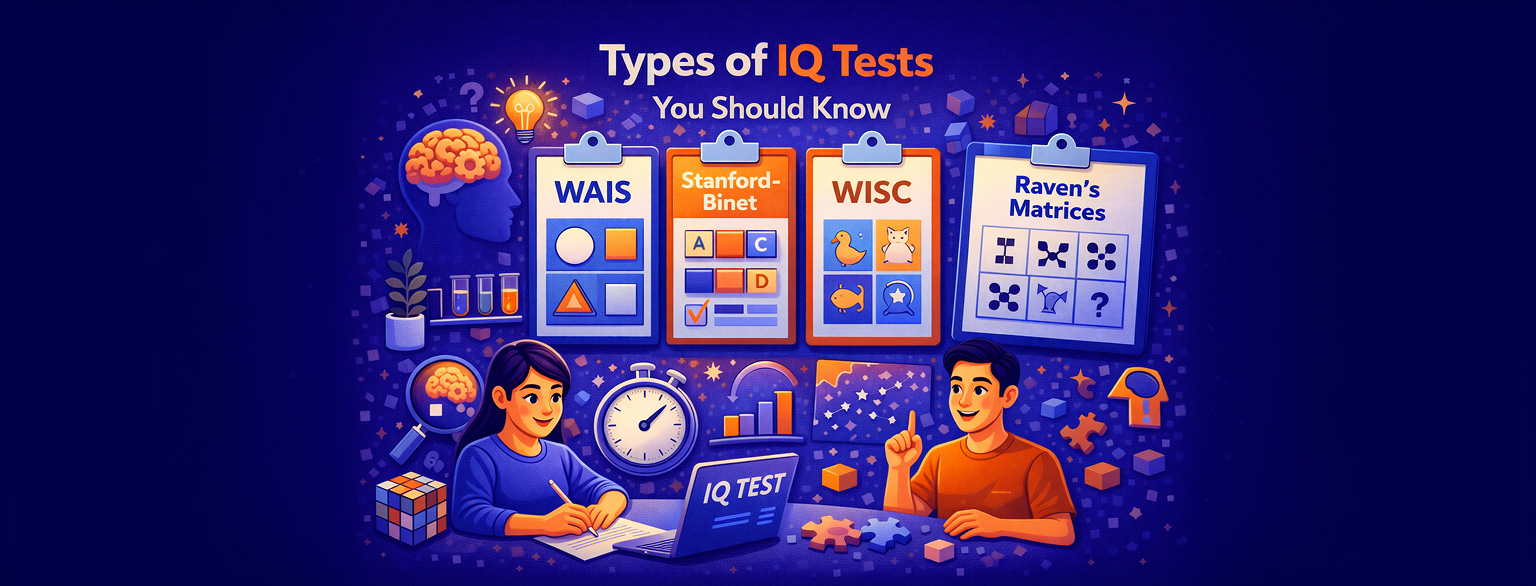
There are several types of IQ tests, and each serves a different purpose:
- Standardized IQ Tests
These are professionally administered and used in schools or clinical settings.
- Online IQ Tests
Widely available and convenient, these tests can be taken from home.
- Free IQ Tests
These are popular among beginners and students. While they may not be as accurate as professional tests, they provide a good estimate of your abilities.
Using a free IQ test is a great way to explore your cognitive skills without any cost or commitment.
5. Are Free IQ Tests Accurate?
This is one of the most common questions people ask.
Pros of Free IQ Tests:
- Easily accessible.
- No cost involved.
- Quick results.
- Good for practice.
Cons of Free IQ Tests:
- Not always scientifically validated.
- May lack standardization.
- Results can vary between platforms.
While a free IQ test can give you a general idea of your intelligence level, it should not be considered an official measurement. For accurate results, professional testing is recommended.
6. 10 Interesting Facts About IQ Tests
Here are 10 fascinating facts that will deepen your understanding:
- IQ Tests Originated in France
They were initially developed to identify students needing extra academic support.
- The Average IQ Is Always 100
The scoring system is designed so the population average remains constant.
- IQ Can Change Over Time
Contrary to popular belief, IQ is not fixed and can improve with learning and practice.
- Different Tests Give Different Results
Not all IQ tests measure intelligence the same way.
- Online Tests Are Not Always Reliable
Some prioritize entertainment over accuracy.
- Practice Can Improve Scores
Familiarity with question types can boost performance.
- IQ Is Not the Only Measure of Intelligence
Creativity and emotional intelligence are also important.
- Cultural Bias Can Affect Results
Some tests may favor certain backgrounds.
- High IQ Doesn’t Guarantee Success
Success depends on many factors beyond intelligence.
- Free IQ Tests Are Extremely Popular
Millions of people take a free IQ test online every year.
7. How to Take a Free IQ Test Online
If you’re ready to try an IQ test, here’s a simple step-by-step guide:
Step 1: Choose a Reliable Website
Look for platforms with good reviews and clear instructions.
Step 2: Find a Quiet Environment
Minimize distractions to get accurate results.
Step 3: Read Instructions Carefully
Each test may have different rules.
Step 4: Complete All Questions
Answer honestly and avoid guessing too much.
Step 5: Review Your Results
Understand your score and what it means.
Taking a free IQ test is a quick and engaging way to explore your mental abilities.
8. Benefits of Taking an IQ Test
There are several advantages to taking an Intelligence Quotient test:
- Self-Awareness
You gain insight into your strengths and weaknesses.
- Academic Guidance
Students can identify areas for improvement.
- Career Planning
Certain careers value analytical and problem-solving skills.
- Personal Growth
Understanding your thinking patterns can help you improve.
Even a simple IQ test can provide valuable information for personal development.
9. Limitations of IQ Tests (Important for Trust)
While IQ tests are useful, they have limitations:
- They do not measure creativity.
- Emotional intelligence is not included.
- Results can be influenced by test conditions.
- Cultural differences may affect performance.
It’s important not to rely solely on an IQ score to define your intelligence or potential.
10. Conclusion: Should You Take an IQ Test?
So, what does IQ stand for? It represents Intelligence Quotient, a useful but limited measure of cognitive ability.
If you’re curious about your mental skills, taking a free IQ test is a great starting point. It’s quick, accessible, and can offer interesting insights into how your mind works.
However, remember that intelligence is multi-dimensional. Your IQ score is just one piece of the bigger picture.
So, what does IQ stand for? It represents Intelligence Quotient, a useful but limited measure of cognitive ability.
If you’re curious about your mental skills, taking a free IQ test is a great starting point. It’s quick, accessible, and can offer interesting insights into how your mind works.
However, remember that intelligence is multi-dimensional. Your IQ score is just one piece of the bigger picture.
Final Thoughts
Whether you’re a student, beginner, or simply curious, learning about IQ can be both fun and informative. With the availability of online tools, trying an IQ test has never been easier.
If you haven’t already, consider taking a free IQ test today and discover what your score says about you.
Frequently Asked Questions
IQ stands for Intelligence Quotient, a standardized measure of cognitive abilities used in IQ tests.
An IQ score of 90–109 is average, 110–119 is high average, 120–129 is superior, and 130+ is considered very high intelligence.
An IQ test evaluates logical reasoning, problem-solving, memory, verbal comprehension, and pattern recognition.
Free IQ tests can provide a quick estimate of your intelligence but may lack scientific validation and standardization.
Yes, IQ can improve through mental training, practice, and learning, though changes are typically gradual.
There are standardized IQ tests, online IQ tests, and free IQ tests, each with different levels of accuracy and reliability.
Choose a trusted website, ensure a quiet environment, follow the instructions, and answer honestly for the most accurate results.
Different IQ tests measure intelligence in different ways, and online tests may vary in difficulty and scoring methods.
Yes, many IQ tests are designed for children and students to measure cognitive development and learning potential.